North Pond and Middle Pond Algae Blooms
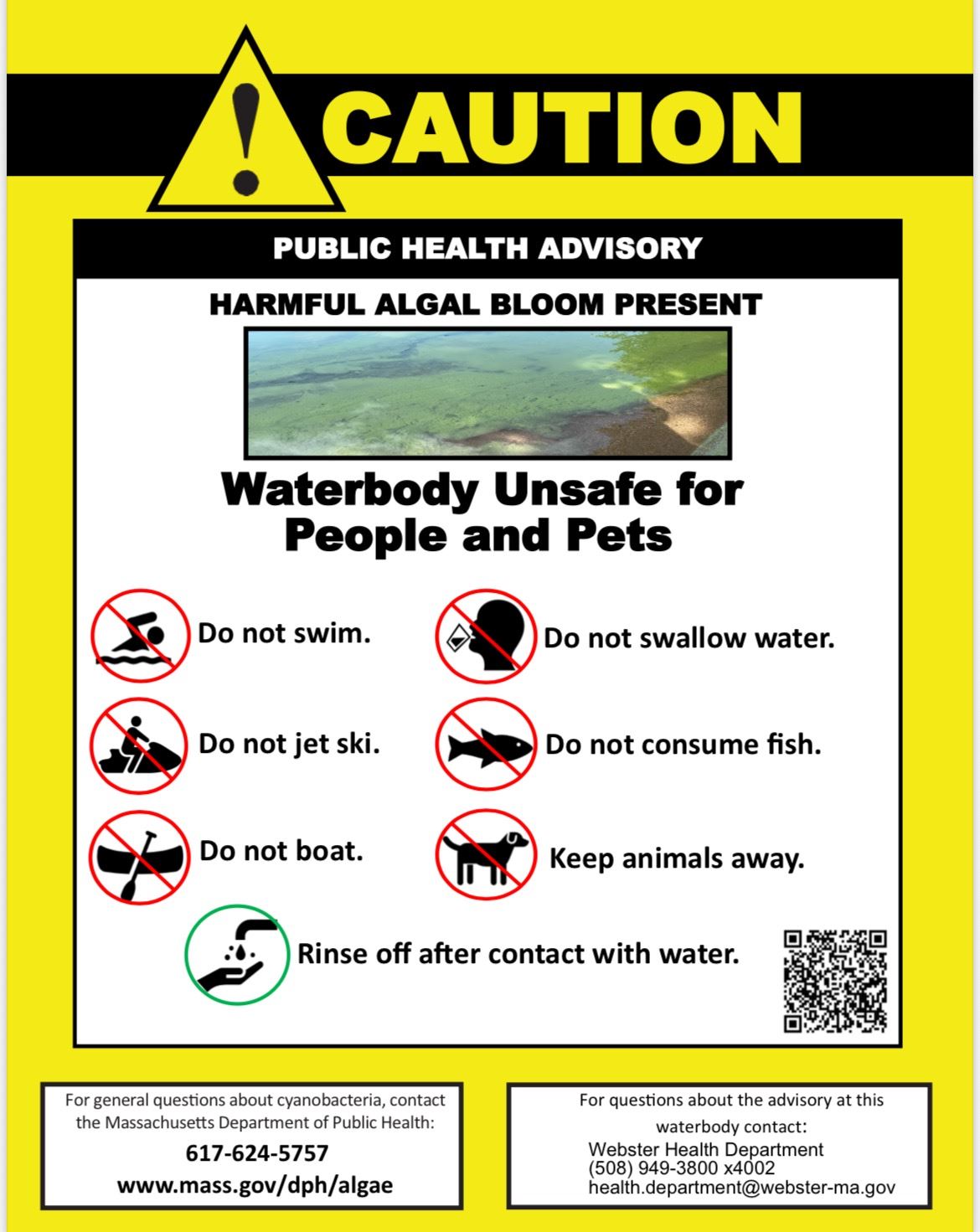
Harmful Algae Bloom found in both North Pond and Middle Pond of Webster Lake.
As of 9:55am Tuesday, August 12, 2025, a Public Health Advisory for North Pond in addition to Middle Pond of Webster Lake.
North Pond and Middle Pond of Webster Lake are unsafe for people and pets.
The Health Department is monitoring conditions at South Pond daily. When in doubt, stay out!
If you see any signs of algae in South Pond, please contact the Health Department at (508) 949-3800 x4002 or email photos to health.department@webster-ma.gov.
What are the possible health effects associated with cyanobacteria?1
Health effects associated with blooms vary depending on the type of cyanobacteria, the route of exposure, and the amount of toxins present.
- Ingestion is the primary concern. Ingesting small amounts of cyanobacteria or toxin can cause gastrointestinal symptoms. Ingesting large amounts of toxins may cause liver or neurological damage.
- Contact with cyanobacteria can cause skin or eye irritation.
- Inhaling water spray containing cyanobacteria can cause asthma-like symptoms.
- Small children and pets are more susceptible to the effects of toxins than adults.
What should I do if I am exposed to cyanobacteria?
During a bloom, DPH recommends avoiding contact with the water.
If contact occurs, wash yourself and your pet with tap or bottled water. If you or your pet swallows water, call your doctor or veterinarian. If you believe you or your pet is experiencing adverse health effects, contact your doctor or veterinarian immediately.
If your animal goes in or near the water…2
If your pets or livestock go in water with a possible cyanobacterial bloom, immediately wash them off with clean water to keep them from licking cyanobacteria off their fur.
Call a veterinarian if your animal shows any of these signs:
- Loss of energy
- Loss of appetite
- Vomiting
- Stumbling or falling
- Foaming at the mouth
- Diarrhea
- Convulsions
- Excessive drooling
- Tremors and seizures
- Any unexplained sickness that occurs within a day or so after being in contact with water.
What can be done to eliminate an algal bloom?
Unfortunately, once a bloom appears there are few options besides letting it run its natural course. Blooms depend on available nutrients and optimal weather conditions. Chemical treatment methods (such as algaecides) are not recommended during a bloom.
Rescinding a Public Health Advisory3
Cyanobacteria cells can release cyanotoxins into the water when they die. Therefore, algal toxins may be present when a visible scum or mat is no longer evident. DPH recommends the rescinding of a public health advisory after two successive samples, collected a week apart, demonstrate cell counts or toxin levels below the quantitative guideline values.
Sources:
1Harmful algae blooms in freshwater bodies | Mass.gov
2 Preventing Pet and Livestock Illnesses Caused by Harmful Algal Blooms | Harmful Algal Bloom (HAB)-Associated Illness | CDC
3Guidelines for Cyanobacteria at Recreational Freshwater Locations | Mass.gov